Engineering for bulk handling reliability
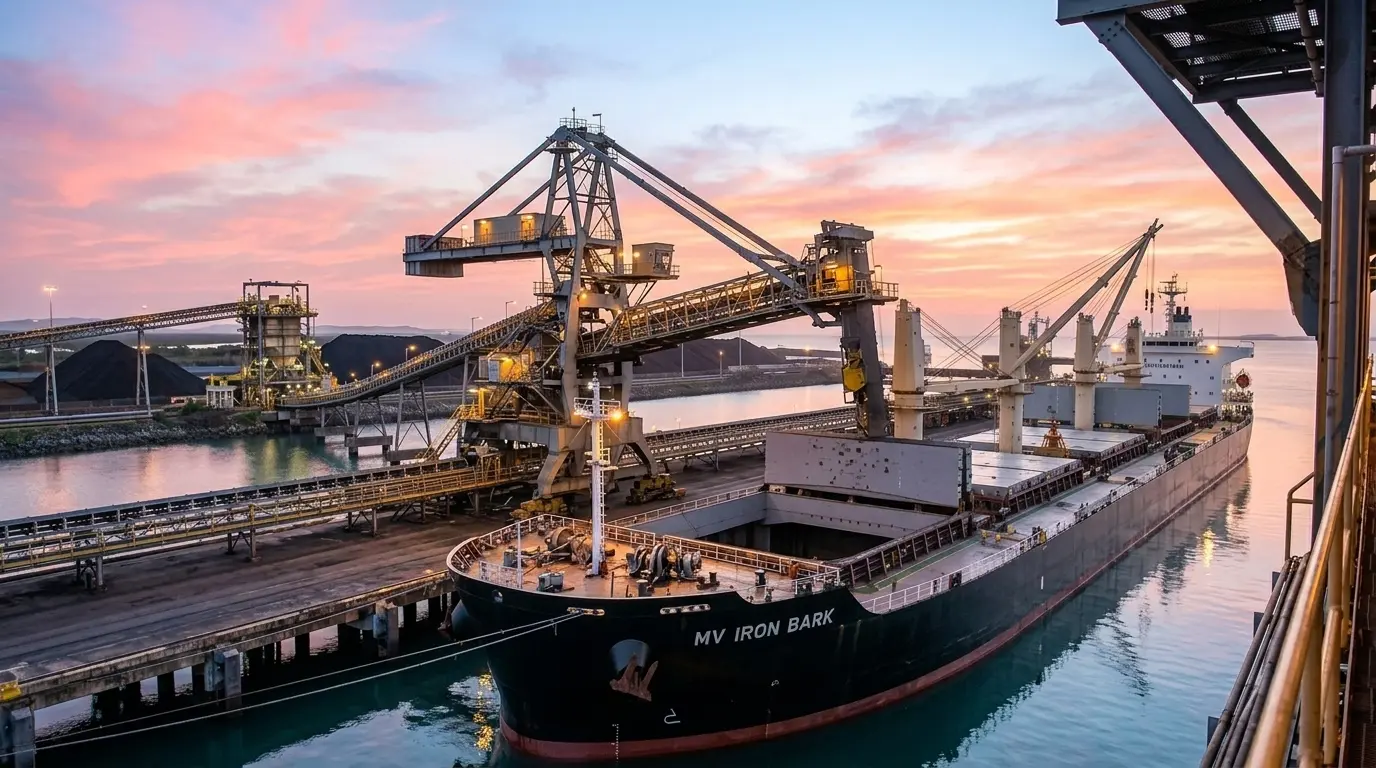
Dennis Murphy has more project hours on port and bulk terminal equipment than almost any other engineering domain. From 2005 through to 2021 his career included sustained engagement at Dalrymple Bay Coal Terminal (DBCT), the largest coal export terminal in Queensland, progressing from commissioning engineer on the Out-Loading 3 expansion through to lead control systems engineer on the ThyssenKrupp RL3 bucket wheel reclaimer installation - one of the most technically complex bulk materials handling commissioning projects in the Bowen Basin during that period.
Beyond DBCT, his ports and bulk handling work spans iron ore export at FMG Port Hedland (present for first ore on ship at Fortescue’s inaugural export shipment), iron ore stackers at BHP Newman Hub in Western Australia, Sandvik yard machine commissioning at Rio Tinto Cape Lambert Port B, Assmang Khumani Iron Ore in South Africa, CPM Sino Iron Project at Karratha WA, and ongoing support at DBCT across stacker-reclaimer upgrades, mooring hook systems, and belt weigher integration.
What we do in ports and materials handling
Our work in ports and bulk terminals covers PLC programming and upgrades on conveyor and bulk handling systems, SCADA for terminal-wide monitoring and control, fault finding and support, and shutdown work for planned maintenance and upgrade periods.
Conveyor control upgrades are a significant part of our work. Replacing aging relay logic, obsolete PLCs, or end-of-life hardware with modern control systems requires careful engineering - the interlock logic has to be understood completely before it is rewritten, and the cutover from old to new has to be managed without creating new risk. We approach these projects systematically and test thoroughly before handing over to operations.
Shiploader automation is a specialist area within our ports work. Positioning systems, drive controls, load rate management, and integration with vessel planning and loading management systems require specific knowledge of the equipment and the operational process. We have experience across multiple shiploader platforms and control system generations.
Integration across OEM equipment
Bulk handling terminals typically include equipment from multiple manufacturers - conveyors from one supplier, a stacker-reclaimer from another, a shiploader from a third. Getting these systems to communicate cleanly, share interlocks, and present a coherent picture to the SCADA operator requires integration work that OEM commissioning teams do not always complete.
We design and implement integration between disparate systems using industrial communications protocols - Ethernet/IP, Modbus, Profibus, and OPC-UA - and ensure that the integrated system behaves correctly across all operating modes, including fault conditions and equipment transitions.